Research Opportunities for Students, Teachers, and Amateur
Astronomers
(Fresno State
Physics)
Office: McLane Hall, Room 11, in the new Building J (or
"J-wing")
Current Opportunities:
|
|
|
(1) Sierra Remote Observatories. Click the following for:
|
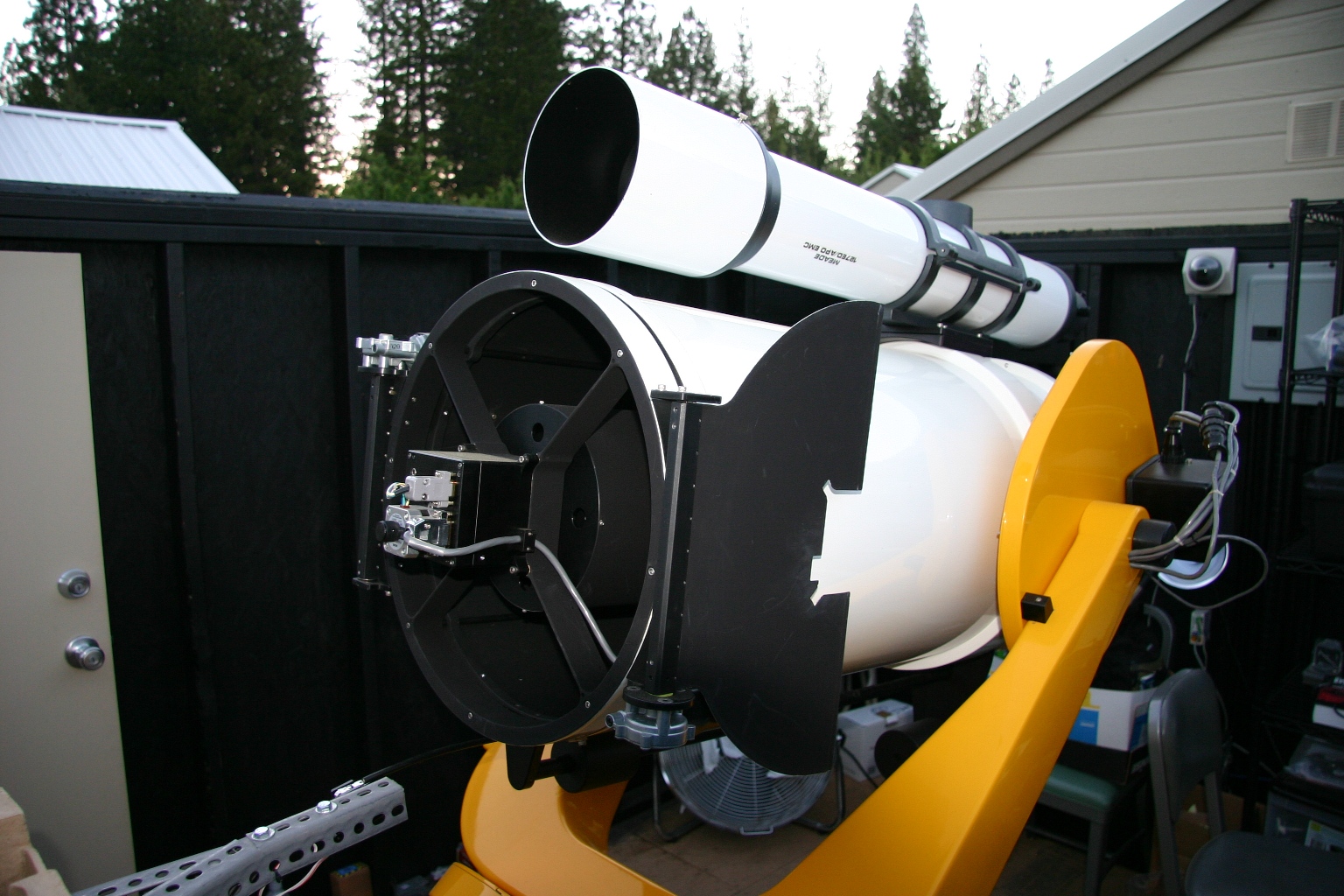
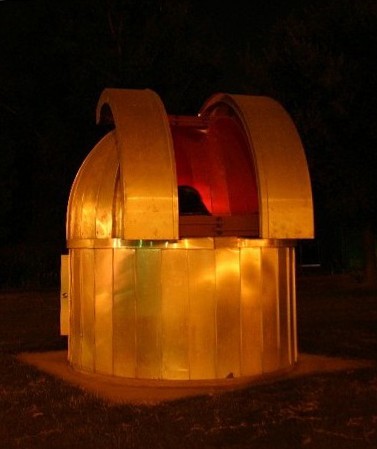
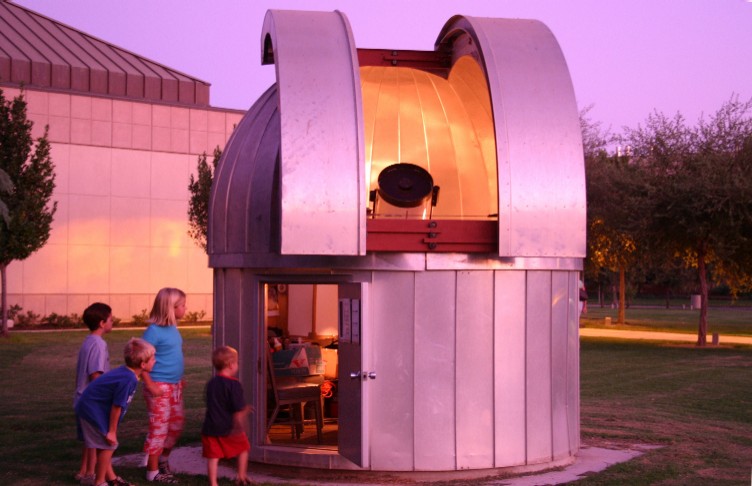
The eight Sierra Remote Observatories were built in 2007. The project was
founded by Dr. Greg Morgan, Dr. Keith Quattrocchi, and
Dr.
Mel Helm, all of whom are members of the Central Valley Astronomers.
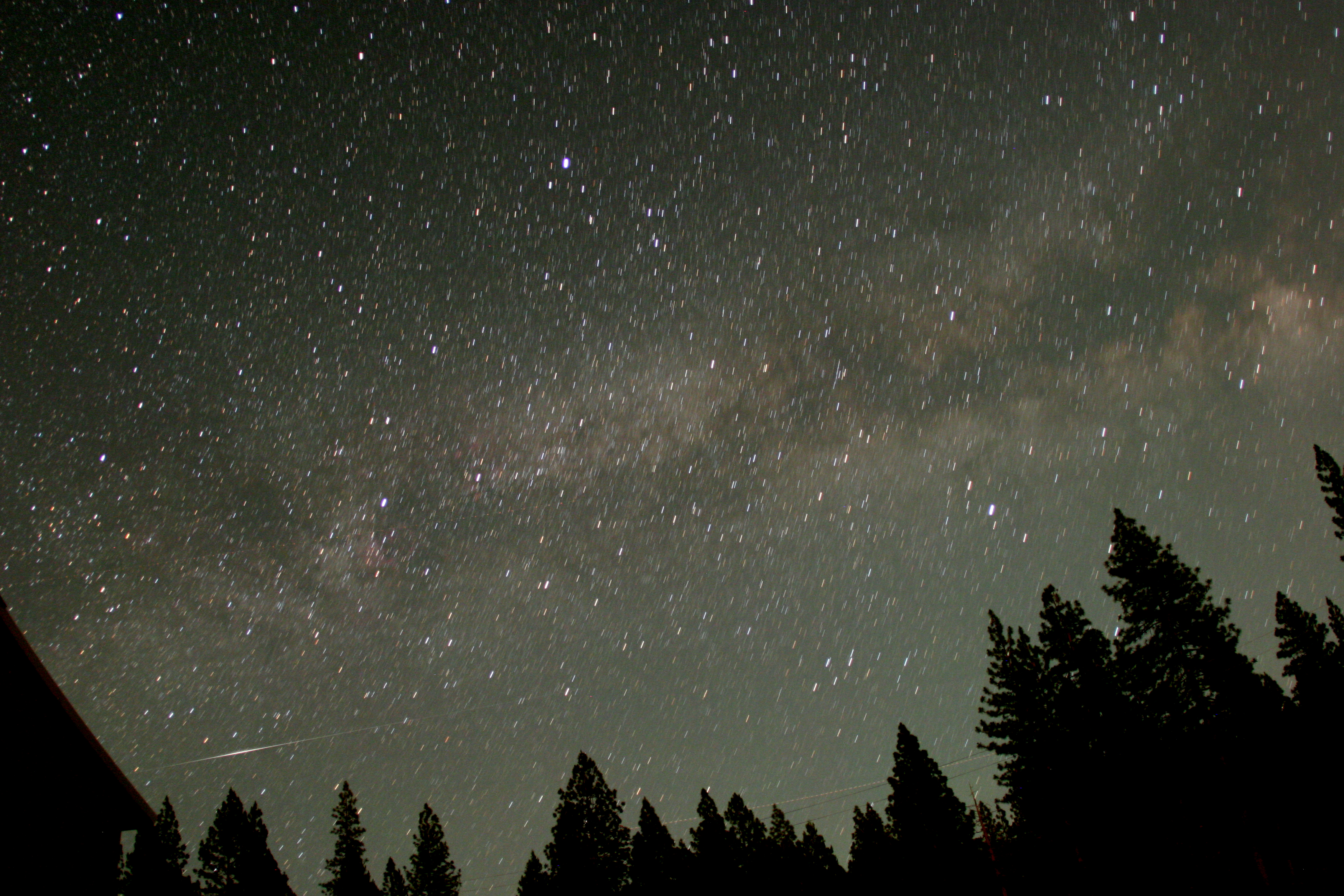
The observatories are at a dark site at 4610' altitude, near Shaver Lake.
Fresno State's telescope is in Observatory #7. We operate it mainly from
campus, 47 miles away, by remote control over the Internet. The 16-inch f/8 telescope
is by DFM Engineering. It has
an SBIG STL-11000M
camera and an AO-L adaptive
optics guider.
Planned science programs include:
- Observations of how stars change brightness over time, also called
synoptic photometry. This is possible at almost no observatories, because
of the way telescope time is divided up, into blocks of a few nights for
each observer. We plan a broad program of synoptic astronomy because of
this, particularly of exoplanet transits, flare stars, starburst galaxies,
soft-X-ray transients, cataclysmic variables, and stars that have
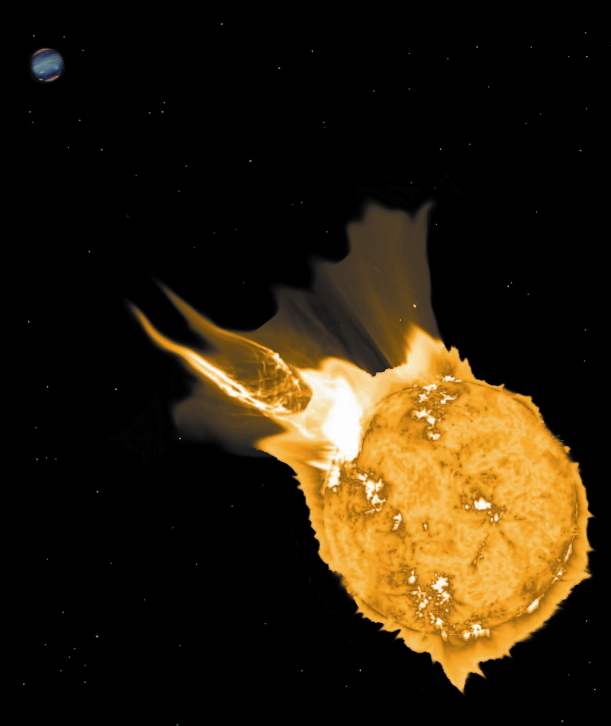
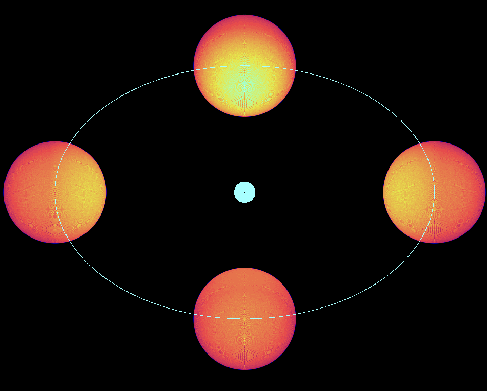
undergone one or more episodes of common
envelope evolution, in which stars eat each other.
|
|
|
(2) Fresno State's Campus Observatory.
Click the following for:
|
The Campus Observatory is on the grounds of the Downing Planetarium, at
longitude 119.7447 degrees West, latitude 36.8147 degrees North, and
elevation 398 feet (121 m). (The local mean time correction is +1m 01.3s.)
Its main telescope is a 16-inch Meade
LX200. The Campus Observatory is well instrumented, with a wide variety
of cameras and other equipment. For an equipment list and a description of
their performance, see here. For a
description of the science programs, see here.
Ongoing science programs include:
-
Discovering and timing transits of
extrasolar planets, by Fresno State students Jesse Rorabaugh, John
Prigge, and Matthew Garrett.
-
Target-of-opportunity observations of the eruptions of classical
novae, by Greg Morgan, John Prigge, and Matthew Garrett.
-
Variable star searches, particularly for hot, high-gravity stars
that heat cool companions that have undergone common
envelope evolution, by Scott Endler, John Prigge, Dan Chase, and Nader
Inan.
-
Timing the spins and the orbits of cataclysmic variables, particularly intermediate
polars (listed
here), by Dave Reynolds and Michelle Meyers.
-
Campaigns with the Center for Backyard
Astrophysics, hosted by Columbia University. CBA is a
global network of small telescopes, dedicated to observing cataclysmic
variable stars and their outbursts. The Fresno State students
involved were David Baer, Randy Clark, and Sarah Lin.
Completed science programs include:
If you're interested, please read the following:
On many projects we collaborate with the Central Valley Astronomers, Fresno's
amateur club, who are a huge help!
If you are a Fresno State student or CVA member and have your own ideas for
projects, particularly if they describe a specific, plausible path from
telescope to finished scientific objective, which we can do with the
equipment we have now, please
contact Dr. Ringwald.
(3) Other astronomical observing, as the opportunities arise:
Last updated 2008 July 10. Web page by Dr. Ringwald
(
ringwald@csufresno.edu
)
Department of Physics, California State University, Fresno.
Please read this disclaimer.